The Performance Program Coaching Plans Training Programs Book Your Call Blog Stories About Contact Book a Call

ACL rehab program · Body & Mind

Rebuild the knee. Rebuild the confidence.

A 46-week, test-based rehab program written by a Performance Physiotherapist. You move on when you pass the tests, not when a calendar says so.

  • 6 phases
  • 46 weekly plans
  • Body + Mind tracks
  • Excel tracker

356 AED (≈ US$97) · one-time · instant download

A structured guide to use alongside your surgeon and physio. It does not replace individual assessment.

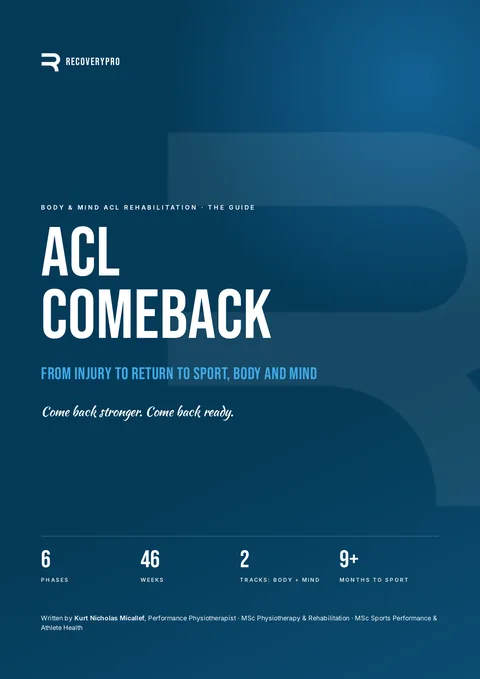
Cover of ACL Comeback, a body and mind ACL rehabilitation program by RecoveryPro

Most ACL rehab plans stop at the knee.

Getting the knee strong is only half of it. Plenty of people pass their physical tests and still don't feel ready to cut, land or tackle again. The hesitation is real, and it often decides whether you get back to the level you left.

Add the gaps between appointments, a printout of exercises with no clear next step, and a timeline that never seems to match how the knee feels, and it's easy to drift, rush, or stall.

Why typical rehab stalls

01

The calendar decides

"Week 12, time to run." But a timeline can't tell whether your knee is ready. Tests can.

02

The mind gets left out

Fear of re-injury is usually checked once, at the very end, if at all. By then it has had months to grow.

03

No plan between appointments

Most of rehab happens on your own. Without a clear weekly plan it's easy to do too much, or too little.

The method

Two tracks. One comeback.

ACL Comeback trains the knee and the mind side by side, from before surgery to your first two years back in sport.

  1. Follow the week

    Each of the 46 weeks has its own page: sessions, sets, reps and effort, plus that week's Mind task and check-in.

  2. Pass both gates

    Every phase ends with a Body gate (range, swelling, strength, hop tests) and a Mind gate (confidence, fear and readiness scores). You move up only when you pass both.

  3. Decide with data

    Your final return-to-sport decision uses the RP Readiness Score: physical tests and psychological readiness, scored out of 100.

The six phases

Timings are a guide. The tests decide when you move on.

  1. Pre-op: Prepare3–6 weeks before surgery
    BodySwelling gone, full range, strength
    MindRealistic timeline, support team, baseline scores
  2. 1. Protect & SettleWeeks 1–6
    BodyKnee straight, swelling down, quads firing
    MindPain coping, three wins a day
  3. 2. RebuildWeeks 7–16
    BodyStrength, balance, single-leg control
    MindProcess goals, mental rehearsal
  4. 3. Run, Jump, LandWeeks 17–30
    BodyRunning, landing, hops, agility
    MindFear ladder, trust your data
  5. 4. Return to SportWeeks 31–40 (month 9+)
    BodyReactive cuts, return ladder
    MindPre-game routine, if-then plans
  6. 5. Stay in the GameThe first 2 years back
    Body15-minute warm-up, strength twice a week
    MindSetback plan, monthly check-in

Safety built in: a knee traffic light for every session (green, amber, red), red flags that mean get seen the same day, and graft-specific notes for hamstring, patella tendon, quadriceps tendon and donor grafts. No pre-op phase? Start at Phase 1.

What's inside

PDF · 29 pages

The Guide

How the program works, every phase's Body and Mind track, the tests and targets, red flags, the questionnaires, and the Readiness Score.

PDF · 50 pages

The Training Program

One page per week for all 46 weeks: sessions, effort, the week's Mind task, the check-in and what to expect that week.

Excel

The Tracker

Your test results with automatic left-vs-right comparison, gate checklists, questionnaire scoring, the Readiness Score and a weekly chart of mood, confidence and fear.

Equipment: Pre-op and Phase 1 need only a towel, a step and a band. From Phase 2 you need a gym and a stationary bike. Every DIY test needs only a tape measure, a phone timer and a phone camera.

Is it right for you?

It's for you if

  • You've had, or are about to have, ACL reconstruction surgery
  • You can't get regular physio, or want more structure between appointments
  • You want to get back to sport, not just walk normally
  • You're a physio, coach or trainer who wants a structured, test-based pathway for clients

It's not for you if

  • You haven't been assessed or diagnosed by a doctor
  • Your surgeon has given you restrictions you don't know yet (ask them first)
  • You're under 16 (only with a clinician and a parent or guardian)
  • You want someone to check your knee in person (book a Consultation instead)
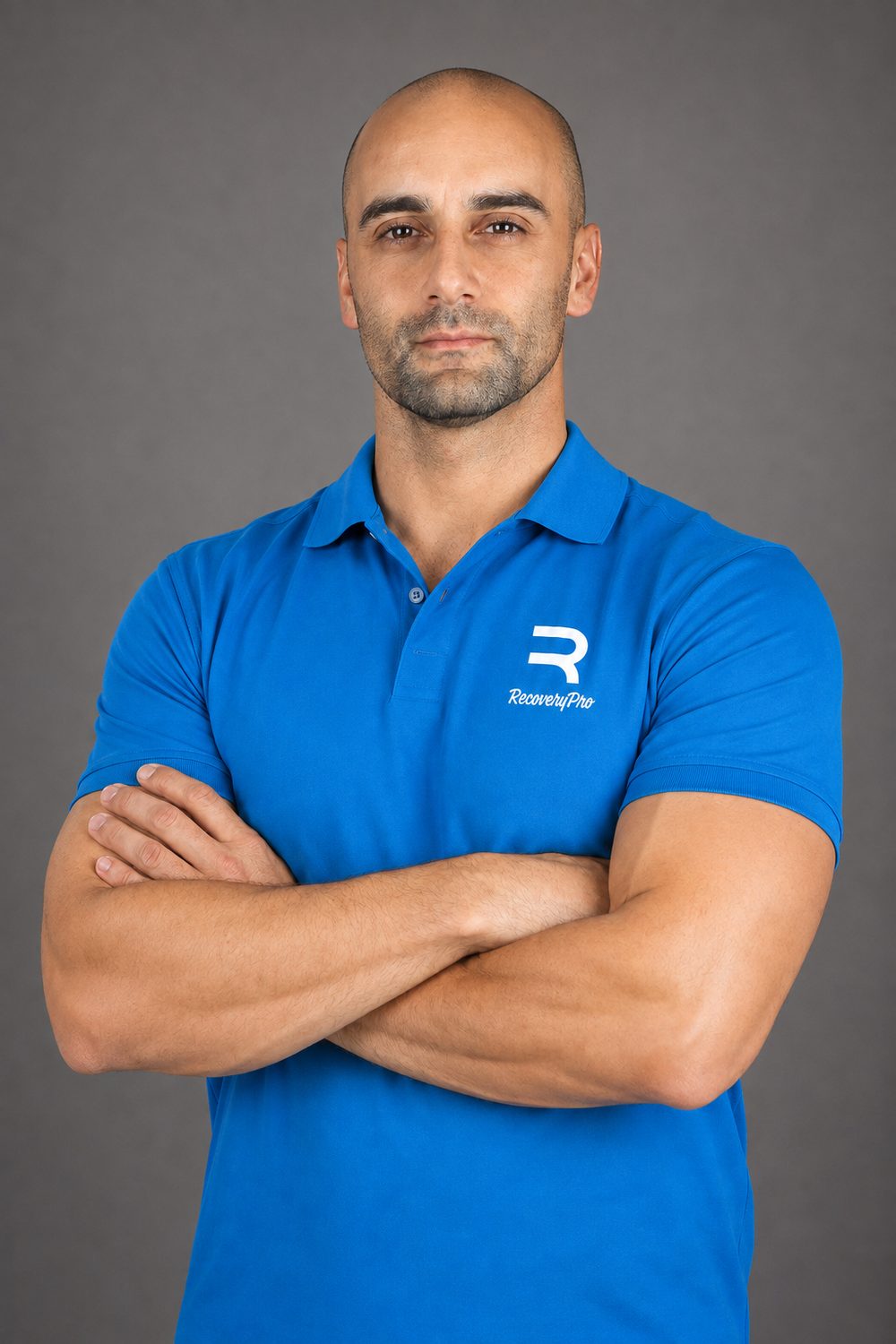
Kurt Micallef, Performance Physiotherapist and founder of RecoveryPro

Who wrote it

Written by a Performance Physio who works with athletes

Kurt Nicholas Micallef is a Performance Physiotherapist with 15+ years across physiotherapy, rehabilitation, strength and conditioning and elite sport.

MSc Physiotherapy & Rehabilitation · MSc Sports Performance & Athlete Health · BSc Sports Therapy

"I built ACL Comeback to help everyone have a clear, test-driven plan for the knee, and real tools for the head game that decides whether you go back to your sport."

Kurt

ACL rehab program · Body & Mind

ACL Comeback

356 AED≈ US$97 · one-time
  • The Guide, the 46-week Training Program and the Tracker
  • Instant download, yours to keep
  • Use it alongside your surgeon and physio
  • Written by a Performance Physiotherapist
  • Instant download · 2 PDFs + Excel tracker
  • Questions before you buy? hello@rprecoverypro.com, reply within 24 h

Inside ACL Comeback

The Body and Mind pathway page from the ACL Comeback Guide
Body + Mind pathway
A full training week page from the ACL Comeback Training Program
A full training week
A Mind track page from the ACL Comeback Guide
The Mind track

Want Kurt to look at your rehab? Book a 1:1 video call (250 AED).

Questions

I'm already seeing a physio. Is this still useful?

Yes. Many people only see their physio every week or two. ACL Comeback gives you a clear plan for the days in between, and your physio can use the tests and gates to guide your progress. Share it with them.

I can't get to a physio. Can I do this on my own?

The program is written so you can follow it on your own, with simple self-tests you can do at home or in the gym. Every test that normally needs a clinician has a do-it-yourself version, with advice to stay on the cautious side. You still need your surgeon's guidance and approval before returning to sport.

I'm already several months past surgery. Can I start mid-way?

Yes. Do the tests at the end of each phase, starting with Phase 1, and start at the first phase where you don't pass both gates.

I haven't had surgery yet.

Start with Pre-op. Arriving at surgery with a straight, calm, strong knee is a big part of what the Pre-op phase is for.

I had a meniscus or cartilage repair as well.

Follow your surgeon's limits on weight bearing, bending and bracing first. The program fits around them, not the other way round. If you don't know your restrictions, ask your surgeon before starting.

What equipment do I need?

Pre-op and Phase 1: a towel, a step and a resistance band. From Phase 2: gym access and a stationary bike.

Does it work for my graft type?

The Guide has specific notes for hamstring, patella tendon, quadriceps tendon and donor (allograft) grafts.

Will this guarantee I get back to my sport?

No program can guarantee that. ACL Comeback gives you a structured, test-based plan and the tools for the mental side, so the decision to return is based on evidence rather than the date.

How do I get it?

Right after payment you get the download links on screen and by email: the Guide, the Training Program and the Tracker. They're yours to keep.

Can I get a refund?

As a digital download, all sales are final. You can look at sample pages before you buy ("Peek inside"), and email hello@rprecoverypro.com with any question first. We reply within 24 hours.
Your knee has a plan. Now your head does too.

ACL Comeback provides general rehabilitation and training education. It is not medical advice, diagnosis or an individual prescription, and it does not replace care from your surgeon, doctor or physiotherapist. Follow your surgical team's instructions and stop and seek help if something feels wrong.