The Performance Program Coaching Plans Training Programs Book Your Call Blog Stories About Contact Book a Call

Post-ACL program · months 12 to 24

You came back. Now stay back.

A 52-week strength, power and decision-making program for the year after you return to sport, written by a Performance Physiotherapist. Both knees trained, tested and tracked.

  • 4 blocks
  • 52 weekly plans
  • 9 test points
  • Excel tracker

249 AED (≈ US$68) · one-time · instant download

For people about 12 months after ACL reconstruction who are cleared for sport. Use it alongside your surgeon and physio.

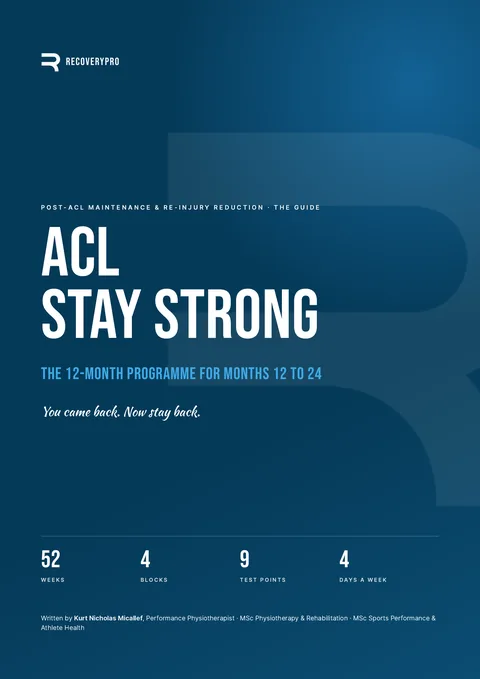
Cover of ACL Stay Strong, a post-ACL maintenance and re-injury reduction program by RecoveryPro

The comeback isn't the finish line.

Second ACL injuries are common in people who return to pivoting sport, and the other knee is at risk as well as the graft. Yet most rehab ends the week you play your first match, just as games, work and life start squeezing training out.

Stay Strong is the year after the comeback, planned week by week.

Where the year after goes wrong

01

The gym gets dropped

The knee feels fine and matches take over. Strength can quietly slip, and a left-vs-right score can hide it if the good leg slips too.

02

Training stays predictable

Sport is fast and unplanned. Drills where you always know what's coming don't train the decisions a match asks for.

03

Nobody re-tests

Without regular tests on both legs, nobody notices a drop until something goes wrong.

The method

Four blocks. Nine test points. Both knees.

52 weeks in four 13-week blocks, from about month 12 to month 24 after surgery. Every deload week is a test week, so your loads are always set from real numbers.

  1. Find your starting tier

    A two-session entry test sets your loads and your tier, so jumps, cuts and decision drills start at the right level. No test data? There's a cautious start.

  2. Train four days a week

    Two lower-body days, an upper and trunk day and a power day, with progressive glute and lower-back work built in. The methods change every block: pyramids, drop sets, waves, contrast pairs and more.

  3. Test and adjust

    Pulse checks every 6 to 7 weeks and full tests every 13. Both legs are scored as raw numbers, against each other and against their own best.

The four blocks

Each block: a reload week, five loading weeks, a deload and pulse check, five more loading weeks, then a deload and full test.

  1. Block 1: RebuildWeeks 1–13 · months 12–15
    BodyMuscle, work capacity, landing and braking
    MindLock in the habits
  2. Block 2: StrengthWeeks 14–26 · months 15–18
    BodyMaximal strength in both legs, single-leg jumps
    MindProcess goals and personal bests
  3. Block 3: PowerWeeks 27–39 · months 18–21
    BodySpeed, reactive strength, reactive agility
    MindFear ladder, trust your data
  4. Block 4: PerformWeeks 40–52 · months 21–24
    BodyFast decisions in sport-like drills, athlete-led training
    MindPre-performance routine, year-three plan

Thinking while moving: landings, cuts and sprints get a decision layer that builds from simple calls to real sport situations, with low-cost drills (cones, cards and a partner) and no gadgets needed.

Safety built in: a traffic light for every session, red flags that mean get seen, a plan for near-misses, and swaps for a back history or a sore front of knee. No program can prevent injury, and this one doesn't claim to.

What's inside

PDF · 29 pages

The Guide

How the year works, the entry test and tiers, every block's Body and Mind track, the drill library, fitting training around your sport, the tests and the questionnaires.

PDF · 74 pages

The Training Program

Every session written out with sets, reps, rest and effort, plus one page per week with that week's targets, a lift log and your check-in. Tap any week on the contents page to jump to it.

Excel

The Tracker

Your starting tier, every test for both legs with symmetry and change from your best, a strength log, weekly check-ins and questionnaire scoring.

Equipment: a commercial gym (rack, leg press, leg extension, leg curl, back extension bench, cable or bands, a plyo box) and open space to sprint. Sessions take 60 to 75 minutes, with 35 to 45 minute versions for busy weeks.

Is it right for you?

It's for you if

  • You had ACL reconstruction about 12 months ago (or longer) and you're cleared for sport
  • You play, or want to play, a sport with cutting, jumping or pivoting
  • You want a plan that fits around training, matches, work and travel
  • You're a physio or coach who wants a structured, test-based second year for your clients

It's not for you if

  • You're less than 9 months after surgery or not cleared yet (start with ACL Comeback)
  • Your knee is swelling, giving way or locking (get it assessed first)
  • You have back pain above 3/10 right now, or pain or numbness down a leg
  • You're under 18 (only with a clinician and a parent or guardian)
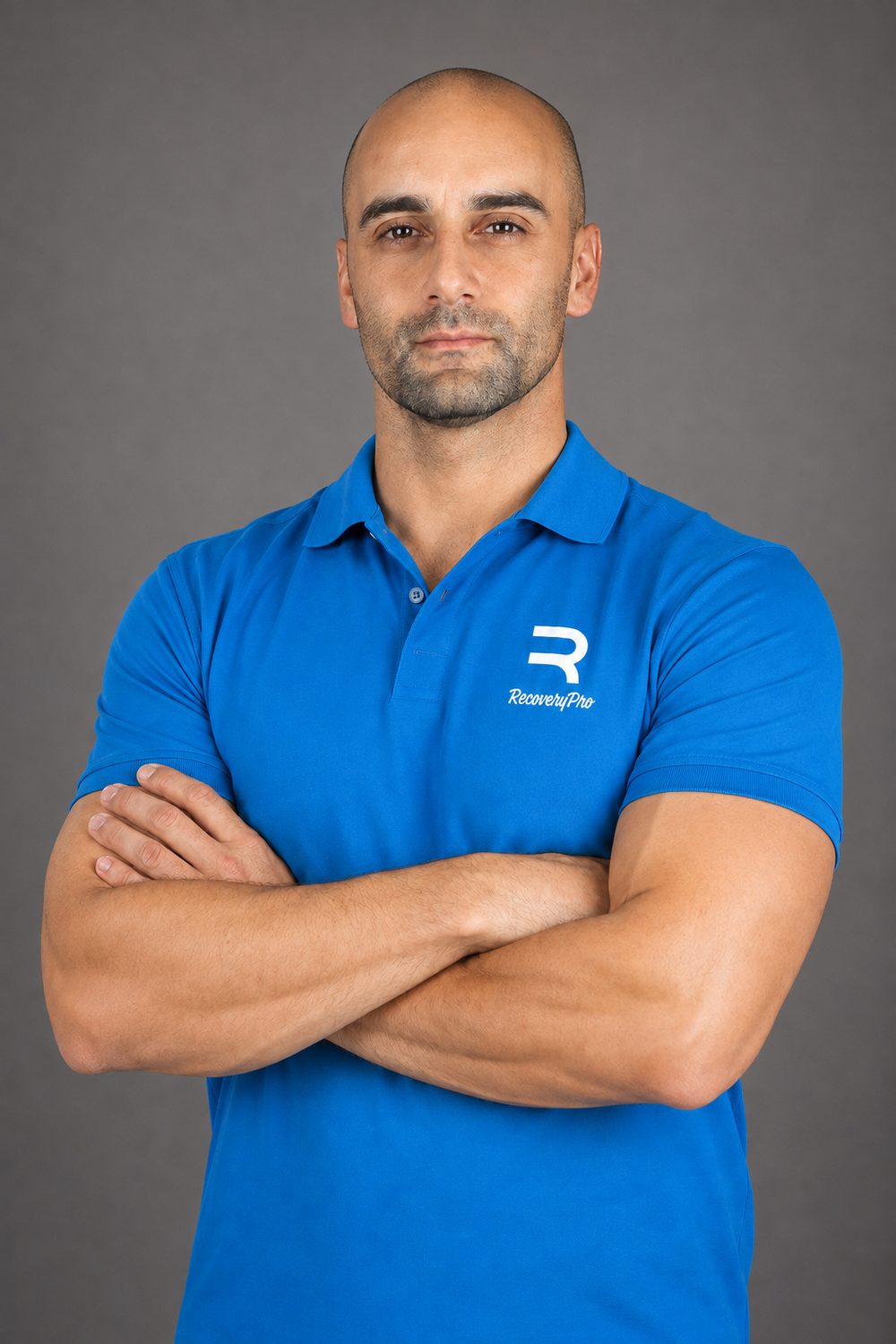
Kurt Micallef, Performance Physiotherapist and founder of RecoveryPro

Who wrote it

Written by a Performance Physio who works with athletes

Kurt Nicholas Micallef is a Performance Physiotherapist with 15+ years across physiotherapy, rehabilitation, strength and conditioning and elite sport.

MSc Physiotherapy & Rehabilitation · MSc Sports Performance & Athlete Health · BSc Sports Therapy

"The year after the comeback is when the work usually stops. I built Stay Strong to keep both knees strong through it, and to give you the numbers to prove it."

Kurt

Post-ACL program · months 12 to 24

ACL Stay Strong

249 AED≈ US$68 · one-time
  • The Guide, the 52-week Training Program and the Tracker
  • Clickable contents: jump to any week in one tap
  • Instant download, yours to keep
  • Written by a Performance Physiotherapist
  • Instant download · 2 PDFs + Excel tracker
  • Questions before you buy? hello@rprecoverypro.com, reply within 24 h

Inside ACL Stay Strong

The year at a glance page from the ACL Stay Strong Guide: four blocks and nine test points
The year at a glance
A full training week page from the ACL Stay Strong Training Program
A full training week
The clickable contents page of the ACL Stay Strong Training Program, with a button for every week
Jump to any week

Want Kurt to review your tests or adapt the plan to your sport? Book a 1:1 video call (250 AED).

Bundle & save 15%

Pairs well with

Add and get both programs for instead of

    You save · one checkout · all 6 files emailed to you

    Questions

    I didn't do ACL Comeback. Can I still use this?

    Yes. Stay Strong starts with a two-session entry test that anyone can do. Your results set your loads and a starting tier, so jumps, cuts and decision drills begin at the right level for you. No test data yet? There's a cautious start while you get tested.

    I'm already 18 months or more after surgery.

    You can still start at week 0. The entry test sets your loads from where you are now, and the year is built so every block works from your own numbers.

    How much time does it take?

    Four sessions a week of 60 to 75 minutes, plus an optional easy fifth day. Every session has a 35 to 45 minute version for busy weeks, and there's a minimum effective week for travel.

    I play matches every weekend. Will this tire me out?

    Matches and practice count as training. The Guide shows how to place the four days around your sport: heavy leg days two days after competition and three days before it, short sessions in busy weeks, and only a light primer two days before a priority match.

    Will it stop me re-injuring my knee?

    No program can promise that, and Stay Strong doesn't. It trains the things linked with second ACL injury that training can change: strength in both legs, landing and braking, hip and trunk capacity, decisions under pressure and confidence. And it tests them regularly, so you can see where you stand.

    What equipment do I need?

    A commercial gym (squat rack, leg press, leg extension, leg curl, back extension bench, cable or bands, a plyo box) and open space to sprint. Every test has a clinic version and a lower-cost version.

    I had a meniscus or cartilage repair as well.

    Ask your surgeon whether deep loaded bending and jumping are allowed before you start. The swaps page has options for a sore front of knee or a back history.

    Can I buy it together with ACL Comeback?

    Yes. When you check out, you'll be offered both programs together for 514 AED instead of 605 AED.

    How do I get it?

    Right after payment you get the download links on screen and by email: the Guide, the Training Program and the Tracker. Both PDFs have a clickable contents page, so you can jump to any week. They're yours to keep.

    Can I get a refund?

    As a digital download, all sales are final. You can look at sample pages before you buy ("Peek inside"), and email hello@rprecoverypro.com with any question first. We reply within 24 hours.
    Still in rehab? ACL Comeback takes you from surgery to return to sport.

    The comeback was the hard part. Staying strong is how you keep it.

    ACL Stay Strong provides general training and education. It is not medical advice, diagnosis or an individual prescription, and it does not replace care from your surgeon, doctor or physiotherapist. No program or test can prevent injury or guarantee that it is safe to play. Stop and seek help if something feels wrong.